Author: J E

  • Favorite Finds: A Witchy Mood from Rated R

    Favorite Finds: A Witchy Mood from Rated R

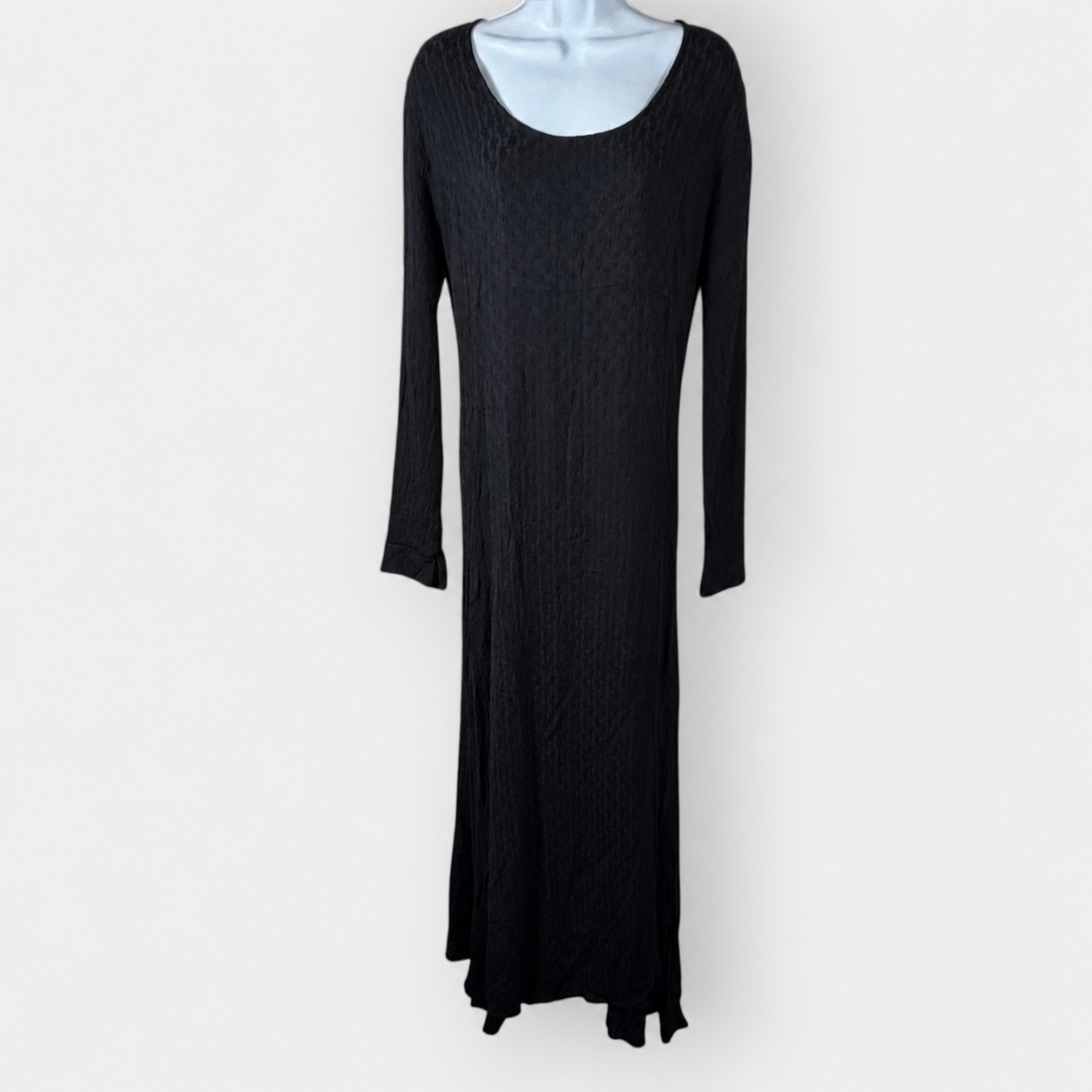
    This black Rated R dress was still there on sale day at Goodwill when it caught my eye. With its long sleeves, scoop neckline, and long, flowing silhouette, it had just the right witchy mood for Halloween week.

    Look closer and the black fabric reveals its pattern. That quiet detail drew me in, but I could also see how someone might have passed it by.

    When I started researching the label, I found a description that felt particularly fitting. A 1988 Los Angeles Times profile described Rated R as a more moderately priced line, with designer Biya Ramar calling its clothing “oversize, casual, comfortable. When you wear it, you’re noticed but not too much.”

    That last line captures what caught my attention. The dress had presence without being showy—and there it was, waiting to be found.

    Her boutique also gave Ramar room to experiment. A 1992 profile of Eclectia described limited-edition designs, handmade chenille sweaters, and long silk-jacquard sheaths.

    There’s an interesting thread from that work to her later designs for Johnny Was. By 2005, Ramar was co-designing JW Los Angeles with Victor Tanisaka, mixing embroidered tees with printed silk-chiffon pieces. I can see a shared interest in expressive fabrics and clothes with movement, even though this black dress has a much quieter personality.

    And the Rated R name? It attracted attention of its own. The Motion Picture Association of America challenged its use in a 1986 court case. Company founder Chaim Ramar maintained that the R stood for Ramar.

    This dress’s tags tell me it’s 100% rayon, made in the USA, and a size Large. I haven’t pinned down its year yet, but its dark, understated drama feels just right for Halloween week.

    References

    Los Angeles Times — “L.A. International,” May 8, 1988
    https://www.latimes.com/archives/la-xpm-1988-05-08-tm-3425-story.html

    Los Angeles Times — “Going Solo,” July 24, 1992
    https://www.latimes.com/archives/la-xpm-1992-07-24-vw-4150-story.html

    California Apparel News — “JW Los Angeles by Johnny Was,” February 11, 2005
    https://www.apparelnews.net/news/2005/feb/11/jw-los-angeles-by-johnny-was/

    Motion Picture Association of America v. Rated R Clothing, Inc. — March 4, 1986
    https://law.justia.com/cases/federal/district-courts/FSupp/646/22/1749684/
  • The Pastiche Pick: A Leather Coat with Penny Lane Style

    The Pastiche Pick: A Leather Coat with Penny Lane Style

    This week’s favorite find was hanging on a rack of clothes waiting to be put out when I spotted it and walked over for a closer look. The Penny Lane coat style caught my eye, and the leather was soft to the touch.

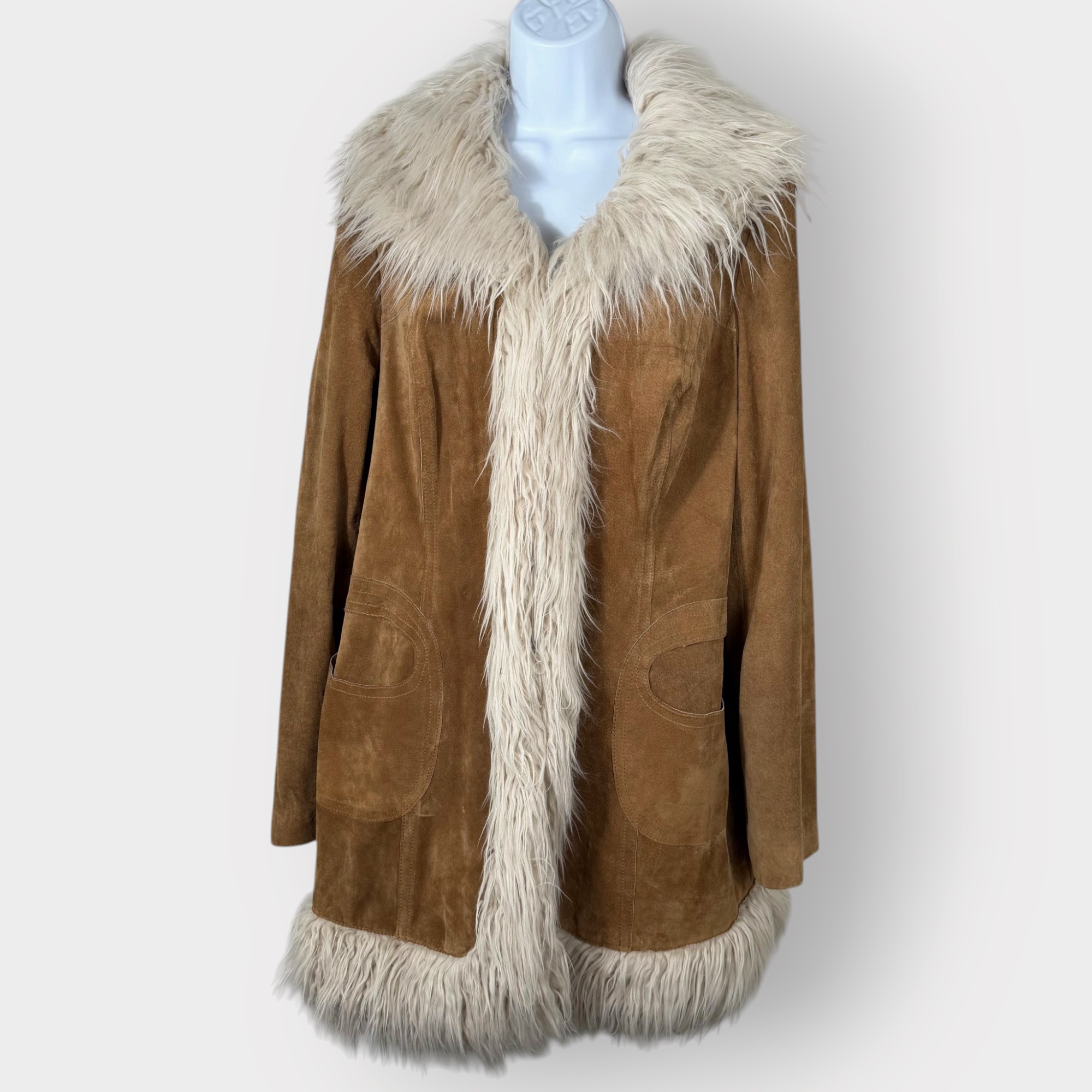
    Caramel-brown INC leather coat with a shaggy cream faux-fur collar, matching front and hem trim, and rounded patch pockets.
    This week’s find: an INC International Concepts leather coat with Penny Lane-style trim.

    It’s caramel-colored, with shaggy cream faux fur around the oversized collar, down the front and along the hem. Large, rounded patch pockets with visible topstitching and a slightly flared shape add to the ’70s look. The leather has a suede-like finish, giving it a softer appearance alongside all that trim.

    Coats with this look often turn up under two names: “Penny Lane” and “Afghan.” There’s some overlap in how those names are used, but each brings a different history.

    The Afghan coat’s roots

    The Afghan coat takes its name from Afghanistan and its sheepskin outerwear traditions. Encyclopaedia Iranica describes coats called postin, worn with the fleece inside and often decorated with embroidery. Its article on Afghan clothing identifies the area around Ghazni as a specialty center for these garments.

    Their popularity in Western fashion grew during the 1960s. The Victoria and Albert Museum dates Afghan coat imports into London to 1966, when small boutiques began selling them. Musicians, including the Beatles, helped popularize the look, which continued into the 1970s.

    The embroidery, sheepskin and generous shapes became associated with the era’s music and fashion. That London boutique story is one chapter in the much longer history of garments worn in Afghanistan.

    Penny Lane coat style in Almost Famous

    The “Penny Lane coat” name refers to the coat worn by Kate Hudson’s character in the 2000 film Almost Famous. Her coat’s broad collar and sweeping shape made it a memorable part of her wardrobe.

    Costume designer Betsy Heimann explained in Interview that she wanted the coat to feel like a protective cocoon for Penny. She took inspiration from the broad collar and swinging shape of a 1920s opera coat and added pleats to give the back visual detail when Penny turns toward William. She also worked with cinematographer John Toll to choose the collar’s shade for the way it would reflect light around Hudson’s face.

    There’s an unexpected detail in the construction, too. Heimann told Vogue that she considered sheepskin Afghan coats too heavy for the costume. Instead, she used upholstery fabric and shaggy trim cut from an Urban Outfitters rug.

    The coat was designed around the character and how she would look and move on screen. Its generous collar and flowing shape are details we now associate with Penny Lane, even when another coat uses different materials.

    This week’s find: an INC leather coat

    The coat I found is by INC International Concepts, with a 100% leather shell, faux-fur trim and a polyester lining. I’m describing it as Penny Lane-style for its oversized collar, shaggy trim and slightly flared shape. Its label says it was made in China, but doesn’t establish its age; the ’70s influence is visible in the design.

    How I’d style this Penny Lane-style coat

    For styling, straight-leg jeans, a fitted knit and ankle boots would keep the layers underneath simple. Flares would lean further into the period look, while a plain dress with tights and boots would let the caramel leather and cream trim stand out.

    I also have a vintage, union-made fabric Afghan-style coat in the shop, with brown textured fabric, a matching belt and cream trim around the collar, front, cuffs and hem. That one carries an ILGWU union label marked “Made in U.S.A.”

    Sources and further reading